


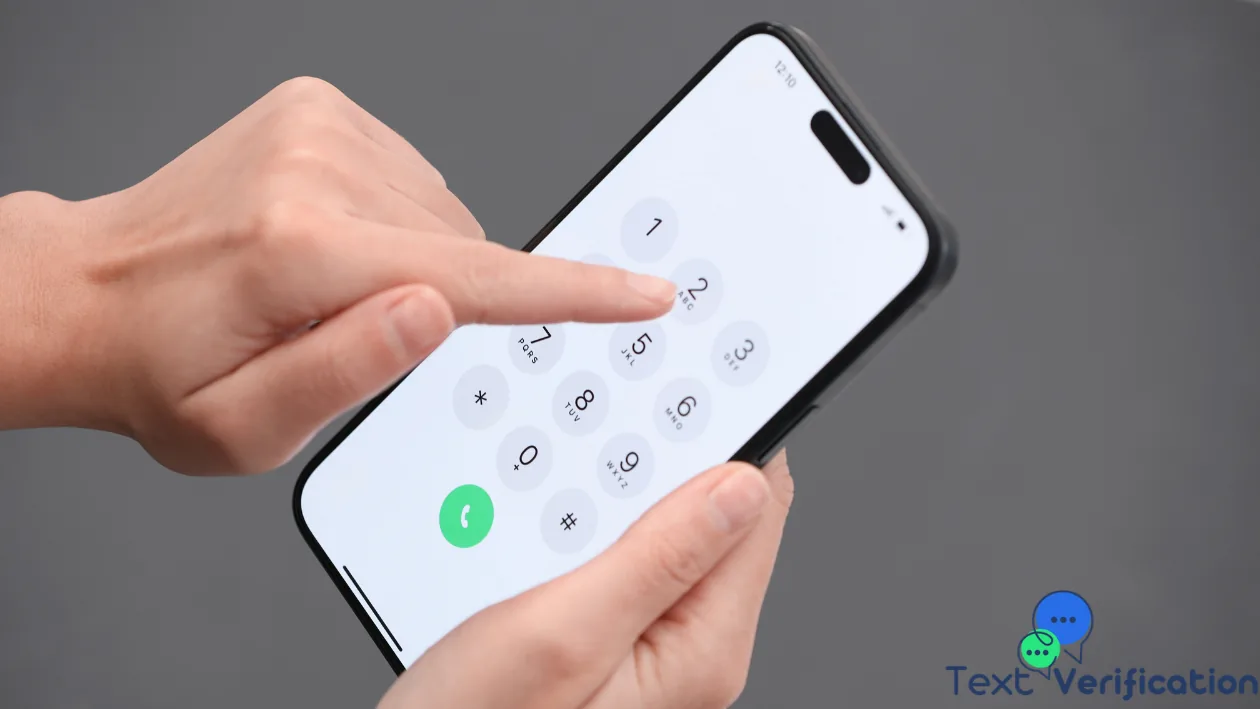
You Type It, They Keep It Forever
Every time you enter your phone number into a website — whether it's a food delivery app, an online store, or a social platform — you're handing over one of the most uniquely identifying pieces of data about yourself. But what really happens on the other side of that form? The answer is far more complex, and far more concerning, than most people realize.
- • You Type It, They Keep It Forever
- • Step 1: Your Number Gets Logged Immediately
- • Step 2: It Gets Matched to Your Existing Profile
- • Step 3: It Gets Shared — Often Without Your Knowledge
- • Step 4: It Becomes a Target for Spam and Scams
- • Step 5: It Can Be Used to Compromise Your Security
- • The Solution: Stop Giving Out Your Real Number
- ◦ How to Use a Virtual Number for Verification
Step 1: Your Number Gets Logged Immediately
The second you submit a form containing your phone number, it is stored in the company's database. Even if you abandon the checkout process midway, never complete the registration, or delete your account later — your phone number has already been captured. Many companies explicitly state in their terms of service that they retain this data even after account deletion, sometimes for years.
Step 2: It Gets Matched to Your Existing Profile
Here is where it gets interesting. Your phone number acts as a universal identifier. Advertising platforms like Meta (Facebook/Instagram) and Google use your phone number to match your account across different services, devices, and websites you've never even visited. This is called cross-device tracking, and your phone number is the master key that makes it possible.
If you've ever used your phone number to log in to one app and later seen ads for that exact product on a completely different platform, this is why.
Step 3: It Gets Shared — Often Without Your Knowledge
Most privacy policies contain language that allows companies to share your data with "trusted third parties" or "partners." In practice, this means your phone number can be sold to or shared with:
- Data brokers — companies that compile and sell personal information to anyone willing to pay
- Advertising networks — who use it to build a behavioral profile of you
- Partner companies — who may have entirely different privacy standards
- Government agencies — in response to legal requests
Step 4: It Becomes a Target for Spam and Scams
Once your number enters the data marketplace, it is essentially permanent. Telemarketers, scammers, and phishing operations purchase phone number lists in bulk. This is why you start receiving unsolicited calls and text messages from numbers you've never contacted — your number was bought as part of a list that originally came from a legitimate company you trusted.
Step 5: It Can Be Used to Compromise Your Security
Your phone number is often tied to your two-factor authentication (2FA). This means that if a bad actor obtains your phone number — through a data breach, SIM swap fraud, or by simply buying it from a data broker — they potentially have the ability to reset passwords on your most sensitive accounts, including your bank, email, and social media.
"Your phone number is the skeleton key to your digital life. It's the one thing connecting your real-world identity to your online presence."
The Solution: Stop Giving Out Your Real Number
The most effective way to protect yourself from all of the above is to use a virtual phone number whenever a website, app, or service asks for your phone number — especially for verification purposes.
A virtual number is a temporary, real phone number that receives SMS messages but is not linked to your real identity, SIM card, or home address. When you use it to verify an account, the company receives a working phone number for their records, but you've protected your personal data from their marketing, data brokers, and potential future breaches.
How to Use a Virtual Number for Verification
- Go to text-verification.net and choose a country.
- Select any available virtual number from the list.
- Use that number in the sign-up form of the website you want to register on.
- Return to our platform to receive and read the verification SMS sent to that number.
- Your real phone number stays safe, and your account is verified.


