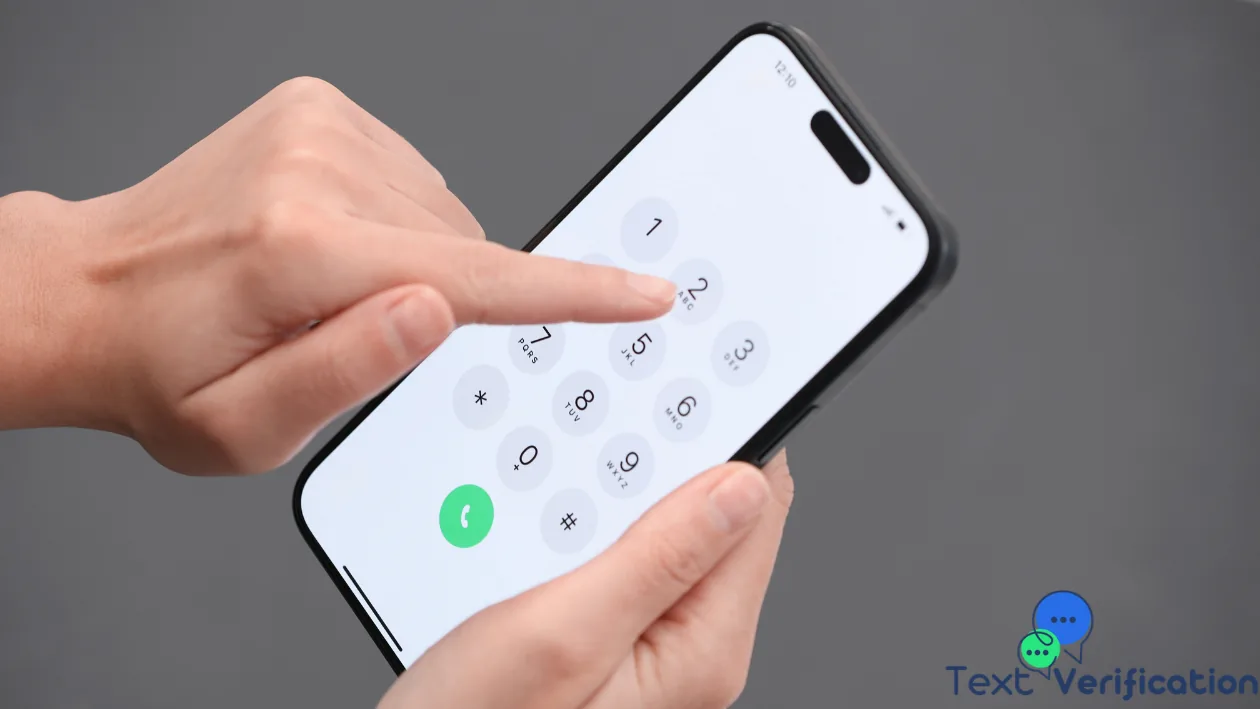
Your phone number is one of the most sensitive pieces of personal information you own — yet most people hand it out dozens of times a year without a second thought. You enter it when signing up for a loyalty card, downloading an app, ordering food online, or joining a new platform. It feels harmless. But your phone number is actually a master key to your digital identity: it links directly to your bank accounts, your social media profiles, your two-factor authentication codes, and even your physical location. In this complete privacy guide, we explain exactly why sharing your phone number online is dangerous, what can happen when it ends up in the wrong hands, and how to protect yourself using a virtual number so you never have to give away your real one again.
- • Your Phone Number Is Not Just a Number
- • The Real Dangers of Sharing Your Phone Number Online
- ◦ 1. SIM Swapping Attacks
- ◦ 2. Spam Calls and Robocalls
- ◦ 3. Smishing (SMS Phishing)
- ◦ 4. Data Breaches
- ◦ 5. Stalking and Physical Safety Risks
- ◦ 6. Targeted Advertising and Profiling
- • Where People Most Commonly Make the Mistake
- • How to Protect Your Phone Number: The Virtual Number Solution
- ◦ For One-Time Registrations (Free Temp Numbers)
- ◦ For Ongoing Business or Personal Use
- ◦ For High-Security Accounts
- • Signs Your Phone Number Is Already Compromised
- • Conclusion
Your Phone Number Is Not Just a Number
Most people think of a phone number as a simple tool for making calls or receiving texts. In the modern digital landscape, it is far more than that. Your phone number has become a universal personal identifier — one that is harder to change than your email address and far more powerful. Here is what your phone number unlocks for anyone who has it:
- Your real identity: Phone numbers in most countries are registered to a name and an address through carrier records. Data brokers can purchase these records and match your number to your full identity within seconds.
- Your bank and financial accounts: Almost every bank in the world now uses SMS verification. Anyone who gains access to your phone number could intercept one-time passwords and drain your accounts.
- Your social media accounts: Instagram, Facebook, Twitter/X, and TikTok all allow account recovery via SMS. With your number, a hacker can lock you out of your own accounts permanently.
- Your location history: Mobile carriers track the location of every active number. In data broker databases, this location data is often sold to third parties, advertisers, and sometimes even malicious actors.
- Your entire digital history: When your phone number appears in multiple databases, data brokers connect the dots across platforms to build a complete profile of your habits, purchases, movements, and relationships.
The Real Dangers of Sharing Your Phone Number Online
Here are the most serious, real-world consequences of sharing your phone number with online services:
1. SIM Swapping Attacks
SIM swapping is one of the most devastating cyberattacks targeting individuals today. In a SIM swap attack, a criminal contacts your mobile carrier, impersonates you using personal details found online, and tricks the carrier into transferring your phone number to a new SIM card that they control. Once they have your number, every SMS verification code goes to them — including password reset codes for your email, your bank, and your cryptocurrency wallets. High-profile victims have lost hundreds of thousands of dollars and years of savings to SIM swappers in a matter of hours.
The best protection against SIM swapping is simple: never link your real phone number to high-value accounts in the first place. Use a virtual number for online registrations and an authenticator app for two-factor authentication on critical accounts.
2. Spam Calls and Robocalls
Once your phone number is in a marketing database, you will receive spam calls for life. Robocall operations send billions of calls every month using automated dialers that work through enormous lists of real phone numbers purchased from data brokers. These calls range from mild annoyances to outright scams designed to steal your money. The average American now receives over 18 spam calls per month, a number that continues to grow every year.
For a full breakdown of how to deal with this problem, read our guide on how to stop spam calls and block robocalls.
3. Smishing (SMS Phishing)
Smishing is the SMS equivalent of email phishing. Scammers send text messages pretending to be your bank, a courier company, a government agency, or a popular service like Netflix or Amazon. The message typically contains an urgent call to action — "Your package could not be delivered, click here" or "Your account has been suspended, verify now" — with a link that leads to a convincing fake website designed to steal your login credentials or payment details. The more places your phone number has been shared, the more likely you are to become a target.
4. Data Breaches
Every company you give your phone number to is a potential security risk. Data breaches at major companies expose millions of phone numbers every single year. Once your number is in a breach, it circulates on dark web forums and is purchased by spam networks and criminal organizations. There is no way to "un-leak" a phone number after a breach — the only solution is to not give it out in the first place.
5. Stalking and Physical Safety Risks
For people who sell items online, date online, or communicate with people they do not know well, sharing a real phone number can create serious physical safety risks. A determined bad actor can use your phone number to find your address through public directories or data broker sites, track your approximate location using carrier data, or use it as a starting point for social engineering attacks against your family and friends.
6. Targeted Advertising and Profiling
Companies like Facebook and Google use phone numbers to match your offline identity to your online behavior. When you give your phone number to a loyalty program, a supermarket, or a delivery service, that number is frequently uploaded to advertising platforms as a "customer match" identifier. The result is that everything you do in the physical world — the stores you visit, the products you buy, the places you travel to — gets connected to your online advertising profile.
Where People Most Commonly Make the Mistake
Understanding where your number gets exposed is the first step to protecting it. Here are the most common and highest-risk scenarios:
- New app registrations: Most apps ask for a phone number during sign-up "for security." In reality, the vast majority of apps do not need your real number — they just want it for marketing and identity verification.
- E-commerce checkouts: Online stores ask for your phone number for delivery notifications. This data is almost always shared with third-party logistics companies and often with advertisers.
- Classified ads and marketplace listings: Sharing your number on platforms like Craigslist, Facebook Marketplace, or OLX exposes it to thousands of strangers. Scammers actively harvest numbers from these listings.
- Competitions and giveaways: Many competitions exist purely to collect phone numbers for marketing lists. Your "chance to win" is often just a way to sell your data.
- Restaurant and business check-ins: QR code menus, Wi-Fi login forms, and loyalty programs at physical locations all collect phone numbers that end up in marketing databases.
How to Protect Your Phone Number: The Virtual Number Solution
The most effective and practical way to protect your real phone number is to use a virtual number — a real, functioning phone number that is hosted in the cloud and completely separate from your personal SIM card. Here is how it works in practice:
For One-Time Registrations (Free Temp Numbers)
When you sign up for a new app, claim a promotion, or register for a service you are not sure you will use long-term, visit text-verification.net and use one of our free temporary numbers. The service sends the verification SMS to our servers, you read the code on screen, and enter it into the registration form. Your real number never touches the service. No spam, no data breaches, no risk.
For Ongoing Business or Personal Use
If you run a small business, post on classified ads regularly, or need to communicate with strangers often, consider a dedicated virtual number. This gives you a consistent secondary number that you can use publicly without ever revealing your real personal number. If the number starts receiving spam, you can simply discard it and get a new one.
For High-Security Accounts
For your most sensitive accounts — banking, cryptocurrency, email — pair a virtual number with an authenticator app. Use the virtual number for registration only, then immediately switch your two-factor authentication to an app like Google Authenticator or Authy. This removes your phone number as a recovery method entirely and eliminates the risk of SIM swapping.
Signs Your Phone Number Is Already Compromised
If you are experiencing any of the following, your number may already be circulating in data broker or spam databases:
- A sudden increase in unsolicited calls or text messages from unknown numbers.
- Receiving SMS codes for accounts you did not request (a sign someone is attempting to access an account linked to your number).
- Calls asking you to confirm personal information, pretending to be from your bank, carrier, or a government agency.
- Receiving targeted ads that seem to know your offline activities suspiciously well.
- Your carrier notifying you of a SIM change you did not initiate.
If you notice these warning signs, act immediately: contact your carrier to add a PIN or passcode to your account, review which services are linked to your phone number, and start using a virtual number for all future registrations.
Conclusion
Your phone number is not just a way to receive calls. It is a gateway to your identity, your finances, and your personal safety. Every time you share it with an online service, you are taking a risk — and those risks add up over time into a serious threat to your privacy and security. The solution is not to stop using the internet; it is to stop handing out your real number to services that do not need it. With free virtual numbers from text-verification.net, you can register anywhere, verify anything, and stay completely protected — without your real phone number ever leaving your pocket.